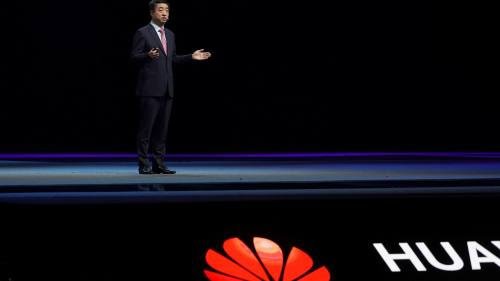
In an exclusive interview with CNN, Huawei founder Ren Zhengfei was clear. He believes Huawei could become the world’s best-selling smartphone brand even without Google
If you don’t know, reaching first place in smartphone sales was Huawei’s big goal for 2019. However, for alleged security reasons, The company has been banned from dealing with United States companies, which prevents it from using Google services and applications at its most recent devices.
Huawei aspires to dethrone Samsung
Although Huawei is already the leader in telecommunications equipment, in the mobile segment Samsung is still the leader. Leadership is harder without devices with the Play Store, Gmail, Maps, or Youtube, but Huawei is confident.
“I don’t think this is a problem,” says Ren Zhengfei about Google. However, The Chinese company has repeatedly said that it prefers to work together with Google if possible.
Please note that Microsoft has already received a special license to do business with the Chinese company (Huawei), provided this does not compromise US national security. According to Ren, Google has not yet had any license approved.
The truth is that Huawei continues to have good results in its sales, thanks to its domestic market. The company now waits patiently for Google to get its license to continue working with it or it will have to go its own way. Huawei Mate 30 still remain the best phone in the World.
Saturday, November 30, 2019
HUAWEI BECAME NUMBER ONE WITHOUT GOOGLE, FOUNDER
Thursday, October 31, 2019
Huawei Shoots Up 66% As Apple Plummets: China Has Given Its Blacklist Verdict
One of Huawei’s greatest defences in its ongoing battle against Washington and the blacklist imposed by the Trump administration has been its stronghold at home. The Shenzhen tech giant knows that the impact of the blacklist is limited by unwavering support at home, where the headline loss of full-fat Android, its biggest international issue, has no impact on smartphone sales—Google’s software and services are unavailable in China.
All that said, Huawei’s performance in pushing out smartphones in the third quarter was extraordinary. As reported by market researcher Canalys, “this is Huawei’s sixth consecutive quarter of double-digit growth amid a gloomy China market.” The company posted 66% annual growth, reaching a staggering 42% smartphone market share.
All Huawei’s rivals have now been left far behind, but it’s the impact on Apple’s iPhone sales that will steal headlines just ahead of its own results. Apple has been desperate to hold onto a sensible market share in China, but this latest drop of 28% on the same quarter a year before takes it down to its lowest quarterly level for five years.
CANALYS
For Huawei, a combination of keen pricing, technical innovation and patriotism has turned a strong domestic position into a dominant one. And given this is the world’s largest smartphone market, that dominance carries significant weight. The overall China market has shrunk slightly year-on-year, down 3%. But of the 97.8 million devices that did ship in the quarter, Huawei had its brand stamped on a staggering 41.5 million of them.
As Huawei sails away, Apple remains stuck below Vivo, Oppo and Xiaomi. And at just a 5.1% market share, it now risks dropping into the dreaded “others” zone. The three also-ran domestic brands all saw similarly material drops—Vivo down 23%, Oppo down 20%, Xiaomi down 33%—and now enter rethink territory with their failure to arrest Huawei’s dominance.
“Huawei is in a strong position to consolidate its dominance further amid 5G network rollout.” Canalys commented. “This puts significant pressure on Oppo, Vivo and Xiaomi, which find it very hard to make any breakthrough.”
Clearly, Apple’s year-on-year quarter three drop has been a year in the making, But its challenge is that with a 5G offering a year away, it risks further China slippage as the market adopts smartphones capable of a generational shift in network speeds. Apple’s position would have been much worse without the launch of the iPhone 11 in the final few weeks of the quarter. Given its late entrance, a surprising 40% of Apple’s third quarter devices were the new models. The Chinese market has taken to camera improvements and tidier pricing—but that will not carry Apple through the next 12 months.
Canalys offered some hope for Apple’s China aspirations, commenting on the iPhone 11 improvements as reason for some optimism. But this need a reality check, the research team warns that Apple “faces a looming challenge, as Chinese vendors and operators drive heavy marketing and promotions around 5G in the next two quarters.” The close out of the year and the all important holiday fourth quarter will give more of an insight into the sustainability of iPhone 11 sales against competition from Huawei’s new devices.
Huawei is on something of a smartphone sales tear this year—it hit the 200 million device shipment milestone a full two months earlier than it managed last year, and expects to reach somewhere around 270 million units shipped by the year-end. This would put it within touching distance of Samsung’s outturn for last year, as it keeps its focus on closing the gap to the global top spot.
Most analysts still expect Huawei to start to take a hit as its newest devices reach the international markets absent core U.S. tech—read Google and full-fat Android. But no-one had expected the level of performance at home that Huawei has managed. It will also expect this growth to continue as the Mate 30 and Mate X sales take hold. This is a self-reinforcing model, the financial rewards can be ploughed back into its development budget as it looks to drive innovation to maintain its heady lead.
Stepping back from the detail, this will be welcome news in Shenzhen after a mixed few days for the company. Despite his government seeming to give Huawei something of a pass, Bruno Kahl, Germany’s foreign intelligence chief, has warned that Huawei should not be trusted as a core network supplier. Meanwhile, in the U.S. the FCC looks set to end what remains of Huawei’s network sales across the rural carriers. And the speculation that the U.K. is set to allow Huawei into its own networks remains unsubstantiated and, if true, will still need to survive an inevitable domestic and U.S. backlash and the uncertainties of an imminent election.
What we do know, though, is that Huawei remains well positioned to continue its battle against Washington. The company has acknowledged the hit it will take internationally, the need for a political compromise or a new non-Google ecosystem that will take years to develop. But what’s happening at home has ensured that none of this will be existential for the company and its consumer business any time soon. And the longer Huawei keeps something close to business as usual, the more the chance that a political compromise between Beijing and Washington is found.
Apple reported solid overall results for the quarter ended September 28, beating analyst estimates. Forbes coverage can be found here. Overall sales in China suggested a marginal decline, shored up by strong early iPhone 11 sales, as reported above, and other revenue streams. iPhone’s market share is sharply down, though, as reported here, with the lack of 5G likely to become an impediment to any recovery with its 5G devices still almost 12 months away.
Friday, October 18, 2019
Huewei Free from US With RISC-V and Ascend Chips
Ascend 910 and MindSpore
Huawei already talked about the Ascend 910 in October last year, but the present announcement marks the commercial availability of the chip, which Huawei claims is the world’s most powerful AI processor. Moreover, Huawei claims that the chip reaches its planned performance targets with lower power than anticipated: the Ascend 910 delivers 256 half-precision TFLOPS in a power envelope of 310W compared to the previously-announced 350W. Performance doubles to 512 TOPS for 8-bit integer calculations (INT8).
Manufactured on TSMC’s 7nm process, The Ascent 910 serves as a neural processing unit for training AI models (as opposed to inference) in the data center, but Huawei says it is also investing in silicon for other compute scenarios, such as edge computing, devices, and autonomous vehicles.
Thursday, September 19, 2019
Huawei CEO addresses Mate 30’s limitations following event
Wednesday, September 18, 2019
Huawei proffers $1.5bn in bid to lure software developers
Tuesday, August 27, 2019
Huewei Free from US With RISC-V and Ascend Chips
Huawei has launched its 7nm Ascend 910 artificial intelligence chip for data centers together with a new comprehensive AI framework MindSpore. The announcement comes at a time when Huawei is facing pressure from the US government, which Huawei is responding to by considering using the open-source RISC-V.
Ascend 910 and MindSpore
Huawei already talked about the Ascend 910 in October last year, but the present announcement marks the commercial availability of the chip, which Huawei claims is the world’s most powerful AI processor. Moreover, Huawei claims that the chip reaches its planned performance targets with lower power than anticipated: the Ascend 910 delivers 256 half-precision TFLOPS in a power envelope of 310W compared to the previously-announced 350W. Performance doubles to 512 TOPS for 8-bit integer calculations (INT8).
Manufactured on TSMC’s 7nm process, The Ascent 910 serves as a neural processing unit for training AI models (as opposed to inference) in the data center, but Huawei says it is also investing in silicon for other compute scenarios, such as edge computing, devices, and autonomous vehicles.
Monday, August 19, 2019
Trump has delayed its ban on trade with Huawei by another three months
This temporary license enables companies such as Google to continue working with Huawei. Huawei depends on Google for access to its Android operating system, the software which powers its smartphones.
One of the reason the Huawei was given temporary license and the expiration date that has been pushed back to September is due to
ARM and Qualcomm in United States. Back in July, Qualcomm said its sales fell in the previous quarter partly as a result of not being allowed to sell to the Chinese firm.(Huawei),
Google will lose more than 150 million customers if Huawei and another Chinese players use a stripped down open source version of Android then securing users accessing Google services like Gmail, Google Drive and others from these devices would be difficult as Google will have little control.
Huawei phone beat IPhone and every United States phones in Global market which make Donal Trump to be afraid of China taken over global trade.
Huawei phone has proof to be the best phone in the world but is a pity is not coming from United States.
Wednesday, August 7, 2019
Chinese state media hints at Huawei OS this year
Thursday, August 1, 2019
HUAWEI STABILIZES ITS SECOND POSITION IN THE GLOBAL SMARTPHONE MARKET
Tuesday, July 23, 2019
The Apple logo is seen at the entrance to the Fifth Avenue Apple store in New York. Photo: AFP
Friday, July 12, 2019
Android Q isn’t even out of beta, but Huawei is ready to show off EMUI 10 next month
Thursday, July 4, 2019
Huawei's CEO says he so busy patching up the firm's bullet wounds that he may not have time to take a call from Trump
But Trump subsequently and confusingly announced that he was relaxing the trade ban placed on Huawei, and would allow US firms to sell to the Chinese firm.
Ren has said the ban doesn't impact on what Huawei is doing either way.
Huawei founder and CEO Ren Zhengfei says he's so occupied patching up the company he might not have time to take a call from Trump, should the president give him a ring.
Ren made the comments during an 80-minute discussion with foreign reporters at Huawei's Shenzen headquarters last week. According to the Financial Times , he was highly evasive about whether he would take a call from the president.
Ren said that President Trump was no doubt "very busy," and and added that he doesn't speak English. The CEO added that interpreters "don't know much about politics, while I specialise in electronics." And he said Trump is "somebody and I am nobody really."
Finally, Ren added: "I am busy patching up holes [in Huawei's business] and may not have time to talk."
In the wide-ranging discussion, Ren spoke about his embattled firm and compared it to an old photograph of a WWII Soviet warplane that is riddled with bullet holes, yet still airborne.
Huawei has been a focal point in the US-China trade war, with the firm effectively banned from American's next-generation 5G networks. The Trump administration also placed Huawei on a trade blacklist in May, meaning that US firms can't sell to the Chinese company without a licence.
There is some confusion as to where the firm stands now.
At the G20 summit in Japan this weekend,Trump announced he was relaxing the ban on US sales to Huawei. Confusingly, he wouldn't confirm that Huawei was officially off the blacklist, saying only: "We're allowing them [US firms] to sell."
Read more: The Trump administration was roasted for loosening the leash on Huawei and is now scrambling to justify its tactics
According to an internal email seen by Reuters , the Commerce Department has been told to still treat the company as blacklisted.
In an additional statement to the Financial Times, Ren welcomed the apparent relaxation of the ban.
"President Trump's statements are good for American companies," he wrote. "Huawei is also willing to continue to buy products from American companies. But we don't see much impact on what we are currently doing. We will still focus on doing our own job right."
Ren has previously said he would "ignore" a call from Trump.
"Even if the US wants to buy our products in the future, I may not sell to them. There's no need for negotiation. I will ignore Trump, then with whom can he negotiate? If he calls me, I may not answer," Ren told Bloomberg in May .
Monday, June 17, 2019
Huawei Can Build a Fine Phone Without U.S. Parts
I’m not just idly curious: My current phone is a Huawei, and I’m happy enough with it — mainly because of its superior camera, made in cooperation with Germany’s Leica Camera AG — that I don’t want to switch when it’s time to get a new handset. In a way, I have skin in the game: I want Huawei to keep making phones no matter what happens next in the U.S.-China trade war or what national security concerns the U.S. government might have about the company.
Kyle Wiens, the founder and chief executive officer of iFixit, a company that prepares electronics repair manuals and advocates for users’ right to repair, is, in my book, one of the best people to ask about something like this. IFixit takes apart various devices to figure out how they can be fixed. So it has handled all the parts that go into modern phones and knows where they are made.
Wiens’s opinion is that a smartphone can be made without any U.S. technology. It should be possible to source all the necessary parts from producers in China, Japan, South Korea and Taiwan, but some of them will be “subpar,” Wiens told me. “The challenge is staying at the bleeding edge,” he said. “On some things, you’ll be a couple of generations behind.”
The same problem will afflict any manufacturer forced to use the open-source version of the Android operating system, rather than the one supplied by Google’s parent company, Alphabet Inc. “It’ll work, but it’ll be difficult to keep innovating,” Wiens said.
The iFixit teardown of Huawei’s flagship phone, the P30 Pro, didn’t reveal too many parts made by U.S. companies beyond a radio module from Massachusetts-based Skyworks Solutions Inc. (Radio chips are one area where U.S. companies beat the competition.) But then, of course, U.S. export prohibitions don’t just concern U.S. companies’ products. As the law firm Akin Gump wrote in a brief last month, any amount of U.S. work in a technology product can put it within reach of U.S. regulations.
That makes even companies outside the U.S. doubly cautious about supplying anything to those on the U.S. government’s ominous “entity list.” Last year, when ZTE Corp., another Chinese technology company, was banned from using American technology, the Taiwanese semiconductor company MediaTek Inc., which could in theory be the source of alternative components, considered itself affected by the ban and decided to apply for an export permit.
In Huawei’s case, ARM Holdings Plc, the U.K.-based chip designer, told staff last month they would need to drop all projects with Huawei because of the U.S. restrictions. Huawei is one of the few phone makers that use their own processors — the Kirin chips, made by Huawei division HiSilicon — but the chips include technology licensed by ARM. A breakdown of the cooperation would mean Huawei would need to stop using the technology in any further processors it would design.
Huawei, however, appears to have been working to minimize this risk. “We’re definitely seeing them using more of their own stuff,” Wiens says. The company’s next processor, the Kirin 985, is not expected to be affected by the U.S. ban, no matter how safe ARM decides to play it.
As for its in-house operating system, Hongmeng, it is most likely a so-called Android fork, built off an open-source version of Google’s operating system. Google is worried about user security, but probably also concerned about competition from an independent Chinese version of its globally dominant system. Huawei is already working to trademark it, and inviting app developers to offer their products in its App Gallery, so they’re immediately available to Huawei users if the company can no longer preinstall the Google Play Store.
Although Huawei’s path toward independence from U.S. technology certainly isn’t going to be easy, and compromises will have to be made, I’m reasonably certain that by the time my current phone dies, Huawei will have a decent replacement — even if a limited number of chips in it will be inferior to competing U.S. products and the software will need more customization than the Google-supported version. Like many Android users, though, I’m at home with looking under the hood, so that shouldn’t be a deal-breaker.
Given Trump’s aggressive use of U.S. law’s extraterritorial reach, the world needs alternatives to omnipresent American tech. These alternatives are costly and risky to develop, and they may not be up to par for a while, so companies won’t start working on them until they feel threatened. It doesn’t make me happy that Huawei, a company championed by the communist government of China, is the first company to be forced onto this high-risk but worthy path. But no one else has come under attack yet, so Huawei must be the first mover. That makes it interesting to users like myself, who like to try new things and dislike monopolies. In a way, I’d be sorry to see Trump relent: that would most likely extend the status quo.